Sunday, October 26, 2008

Merlons and crenels explained
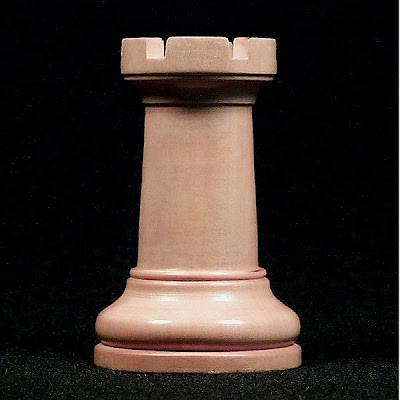
.
.
.
.
.
.
.
.
.
.
.
.
.
.
.
.
.
.
.
.
.
.
.
Mmmm, merlons and crenels, now where can I find an example?:)
.
To write in english, I still use a dictionary every now and then. Often just to check if a word I plan to use indeed means what I think it means. But a dictionary doesn't tell me of course how common a word is in english. Maybe you use a word that is more commonly used like battlement or so?
.
I'm sorry to say that I feel too handicapped without my tools to write a serious post on this subject. I'm not going to invest time to install my tools on this laptop I'm temporarily using so that has to wait untill my new computer arrives. (I hate the primitive keyboard of a laptop and the way to use a mouse with a sort of rubbing pad. Yikes. Where has voice recognition gone?)
.
BTW why is blogger throwing my empty lines away?

Saturday, October 25, 2008

Off line

I have been offline for some time due to computer failure. In happy expectation of a new system I found a temporary solution. So I'm in the air again, but without all my handy tools which I have gathered over the years. In the next few days I will share my experiences with the merlon and crenel metaphor.

Tuesday, October 14, 2008

Gosub. . . . . return


Enough about memorization for the the moment. I know the technique, now it's first time to define what is actually to be memorized. I'm still plugging through SOCES, and it is evident that this book will be my bane for the next few years. I first read it without going through the variations to get an idea what it is all about. Then I will start to reread it and to work out each chapter. I'm halfway with the first read.

But first I will dive in another subroutine. For a few days or a few weeks. No worries, at the end of a gosub there is always a return which will lead me back to SOCES.

From the generalisation of my treatment of the king and pawn endings, the metaphor of the crenels and the merlons emerged. This seems to be a good guiding principle for the opening and the early middlegame, in order to keep complexity below my threshold. So I have a chance to reach an endgame without being in time trouble. I already played two games according to this principle, both against strong opposition. In the first I lost a pawn due to clumsiness, interesting in itself, in the second I had my opponent, who happens to be both our club champion and to play in the team of Phaedrus, in great trouble, allthough he, as usual, managed to escape in the ending and even to convert the game into a win. I will analyze these games first to improve my narrative of crenels and merlons.

Saturday, October 11, 2008

Summary: Having a clue and active attention


Ok, time to summarize.

Clue.
First you must have a clue. You must understand what a position is about.
Second you must have the skills to perform the tasks that arise from the clue.

Active attention.
From our debates about skill-building the picture emerges that active attention is paramount. I dare to say that active attention cuts back the necessity for repetition dramatically. Active attention supplies the feedback for your efforts. No active attention, no feedback. No feedback, no adjustment. No adjustment, no learning.

Putting the body to the equation.
The comparison with physical tasks like swimming or Tae Kwon Do is always a bit tricky. The human body adds a factor of its own. It has its own impediments which one must overcome.

Precision.
From experience with singing I can add that active attention translates to precision. There are always new aspects to discover when singing tone ladders. When you add these aspects as seperate details to your exercise it makes every repetition count. When repeating mechanically you don't learn anything. With no precision you might even ingrain the wrong habits.

Umbrella's everywhere.
In my youth I have never used an umbrella. I never saw somebody use one either. When I was 24 or so I went for the first time outside with an umbrella. During rain, that was. Much to my surprise I saw people with umbrella's everywhere. Have I overlooked them before? Did I simply stay inside during rainshowers due to lack of an umbrella? It seemed as if those people had materialized due to my attention and focus on umbrella's.
It's the same with chess. If you have a theme you are looking for you will find it everywhere. With no theme, you see only what is already familiar. You can overlook important themes for years.

Referential framework.
If you are renovating a house where every wall is askew you have to decide which wall you will call straight. No matter how lopsided that wall is. Once you have chosen a wall as referential framework, you can measure everything back to that wall. If you don't decide which wall will be your reference, you will find your self measuring then from this wall and then from that wall. In that way you can never come to a definite conclusion. From one point of view that sink looks straight, from another point of view it looks askew. I tell you this since it clarifies why I always react on comments in a somewhat insisting way. I always want to make clear the referential framework from which I'm talking. Even if I have chosen a very lopsided wall as base. Don't let it scare you. I'm not attached to my choices. Allthough I never let go my wall of choice.

Merlons and crenels.
My metaphor of merlons and crenels has provided me with a theme. An umbrella. Now I see it in every game and I'm learning from it. I'll be back.

Wednesday, October 08, 2008

Another little intermezzo


There are 3 layers that play a role when writing a blog.

  • First there is what I'm trying to say. Sometime it's right, sometime it's wrong. Sometimes it's contradicting.
  • Then there is my vehicle, a sort of pseudo scientific techno-babble. This causes me the most headaches. The terminology I use has a scientific meaning of itself. Thus time and again I sin against scientific knowledge when using such terms. The problem is that I have no alternative. I tried to introduce many terms of my own, like duplo-attack and so, but that didn't catch on.
  • Third there is the science. Cognitive science is in it's very infancy, so at times some of its idea's now thought to be right will proof to be wrong. It is not done to write flat out in contradiction with scientific idea's, though. So when such idea is actually wrong but now thought to be right, it becomes an impediment in itself for expressing myself. Since I don't have scientific ambitions I want to treat it with respect, even when it eventually is wrong.
So again I have to ask the reader to bear with me and to look through the terminology in order to find out what is behind it.

For me the words procedural, effortless, unconscious, fast are tightly connected to each other and to the term 'motorskill'. The knowledge to ride a bike is a motorskill and the fast retrieval of 'Paris' as the capital of France is a motorskill. Scientificly wrong maybe, I don't know, but I don't bother.
Semantic, declarative, logic, reasoning, conscious, slow, with effort are in my terms connected to 'thinking'.
Knowledge can be both, but is usual used as declaritive.

On to the meat of the matter. I think very high of procedural knowledge as an element of chess improvement. I think it is that what makes the difference between an amateur and a grandmaster. Why is that? (Sorry if I repeat myself from earlier posts)

  • Magnus Carlson could beat me when he was 13. It is impossible that he had more chessknowledge than me at that age. I had read almost 100 books over and over again. Written by the finest grandmasters. Studied them deeply for decades with all my intelligence. I pondered them for hours. Something a 13 year old boy simply hasn't lived long enough for. If he beats me, it simply cannot be by the virtue of having more knowledge. He beats me swift, effortless, without thinking, unconscious. In short, with his procedural motorskills.
  • I played against a former French blitz champion. While he was talking against his friend he beated me while I played my pet variation which I had prepared for weeks. At the most dangerous moment he simply smelled a rat, looked for the first time seriously to the board for 20 seconds, hesitated, and played something that took all the venom out of the position. The difference in speed and the heedlessness of his play was overwhelming. No way that he thought much about the position.
  • In a simul I'm outplayed by usually simple means by somebody who has 1/40th of the time I have
Everything around grandmaster play breathens speed, speed, speed.

I don't frown upon semantic knowledge. Those who remember my series about narratives know better. A good narrative can play a big role, as LikesForests pointed out. If you have a clue in the position you have a chance to play out the position well which you haven't when you don't have a clue. But you need those speedy little motorskills which supports the execution of any task which is dictated by the narrative. The board has to be scanned, traps has to be seen, variations have to be visualised, facts have to be retrieved. Without those speedy motorskills the narrative is close to useless. You have a chance, but you are not able to make use of it. You don't only have to know what to do (the narrative), but you must have the tools for execution too (the speedy little motorskills).

In a comment to a post of LF I said:

The flaw of DLM's method for habitforming lies in the fact that it invites you to mechanically repeat the examples. That is not how habits are formed.
Troyis otoh provides you with positions that are slightly different each time, so passive anticipation on the answer is impossible. That keeps your attention active and you form your habits in no time.

The essential difference between both methods lies in attention. While DLM invites you to fly on the automatic pilot, the fact that you can't anticipate the problems of Troyis keeps you sharp.
My wife is a choir director and I counted that at average she remembers us five times per evening to pronounce our vocals well. That is 200 times a year! Allthough we copy her everytime during the next few minutes, we forget it soon. That indicates that passive repetition alone is not enough to form habits. No matter how often you repeat. You need an active attitude. You need active attention.

Right know I'm following a French language course. First you learn to parrot a few words, but then the words are combined to sententences with variation. Which you can no longer parrot since you can't anticipate what is to come. This method works remarkably well. The lack of anticipation keeps your attention active.

It might be that learning a French word is a semantic effort. In fact I learned 95% of those words 35 years ago but I have forgotten them. But for the fast retrieval of words you seem to need those speedy little motorskills which supports the overall semantic effort. Without such support the talk will be slow and effortfull.

The problems with narratives is the transfer of knowledge to the board, a pet subject of Phaedrus. If you interview our choir members and ask them what is the most important thing in singing, they will answer within seconds "the pronouncation of our vocals". Yet they aren't able to follow their own advice. They miss those pesky little motorskills to support them. They miss the essential tools. To put their knowledge into practice.

Tuesday, October 07, 2008

Fire on board


Allthough I'm working my way through SOCES I can't prevent my mind to think of matters that are only slightly related to the endgame. Not slightly in my line of thoughts, but measured against common standards. To free my mind, I fixate the thoughts in this post. Please bear with me, more about the endgame is to come.

A few days ago I wrote a post about a certain point of complexity beyond which the chessgame becomes a gamble. Hence the word gambit, which is a deterioriation by chessplaying members of the Italian enclave in Stoke-on-Trent of the expression gamble-it.

In the past I wrote a series of posts about the chaos theory applied to chess here. Which disturbed some dust in which the original idea's were lost. But those idea's are closely related with what I'm writing now.

Of course you must become as best as possible in the chaotic part of the game. But once you can't make any easy progress in that area, you have to ask yourself: do I want to continue to turn every chessgame into a gamble? For me I have reached a point where my answer has become a resounding no. I want to learn other aspects of the game. My moves will have the intention to stay clear from uncontrollable turmoil. If my opponent insists in causing such he is welcome, but he will have to make a sacrifice to draw me into it. So the odds will be mine.

Of course that is easier said than done. Let me first see if I can find some turmoil-indicators for the course of the game.
The begin position is turmoil free. The reason for that is that the pieces can't interact.
But allready during the first move, decisions are made about the course of the game. Let's take a deeper look in the difference between the open games and the closed games. The open game stirs up turmoil at move 1, while the closed game progresses much slower. What is the difference? What are the turmoil indicators?

Diagram 1


White to move

Since the queen asserts her influence at d4 white can force the break d4 at an early moment in the game.

Diagram 2


White to move.

In a closed opening it is much harder to force the break e4. It takes a lot of peraparation to accomplish that. The pawn has no support right now at e4.

So tha pawnbreaks open up the cranels and the pieces are needed to support the breaking pawn. Once open, the possibilities multiply and the complexity grows with it.

It make sense to first push the pawnwall forward to gain some room, and to postpone complexity. And hence the moment to gamble.

Wednesday, October 01, 2008

Pouring boiling oil


My invention of the ideal game, in which gain of wood and mate played no role, has proven to work counter productive. So I must try another way to get rid of the disturbance caused by thinking about gaining wood, mate and other distracting bric-a-brac. Dear reader, please ignore them, for the moment. Let's focus on simple things. Later is early enough to add complexity.

The role of the pawns seems to be a moving wall. The pawns are the merlons, the pieces are standing behind them with kettles of boiling oil to prevent the enemy from penetrating through the crenels. Alekhine's guns are shooting a breach in the enemy wall. Then all of a sudden you blow your horns and flow out of the gates in order to storm the barricades. Once you entered trough the breach you try to obtain a bridgehead from where you can attack the enemy from inside.

But are there openings where you keep your pieces behind your pawns? Is there any game theorist who adviced this? Did anyone advice to move the pawnwall forward in front of your pieces? Is the metaphor above a reasonable line of play?